
When Anxiety Disrupts Sleep
Anxiety and sleep disruption form a punishing biological loop. One fuels the other, creating a state of chronic hyper-arousal that leaves the brain exhausted yet unable to rest. Understanding the neurobiology of this cycle is the first step toward reclaiming your nights.
Guide Navigation
- 1. The Bidirectional Anxiety-Sleep Loop
- 2. Cortisol and the “Wired but Tired” State
- 3. Common Patterns of Sleep Disruption
- 4. Cognitive Overdrive: The Nighttime “Racing Mind”
- 5. Long-term Physiological Consequences
- 6. Diagnostic Assessment in Texas
- 7. Clinical Stabilization and Treatment Paths
- 8. Frequently Asked Questions (FAQ)
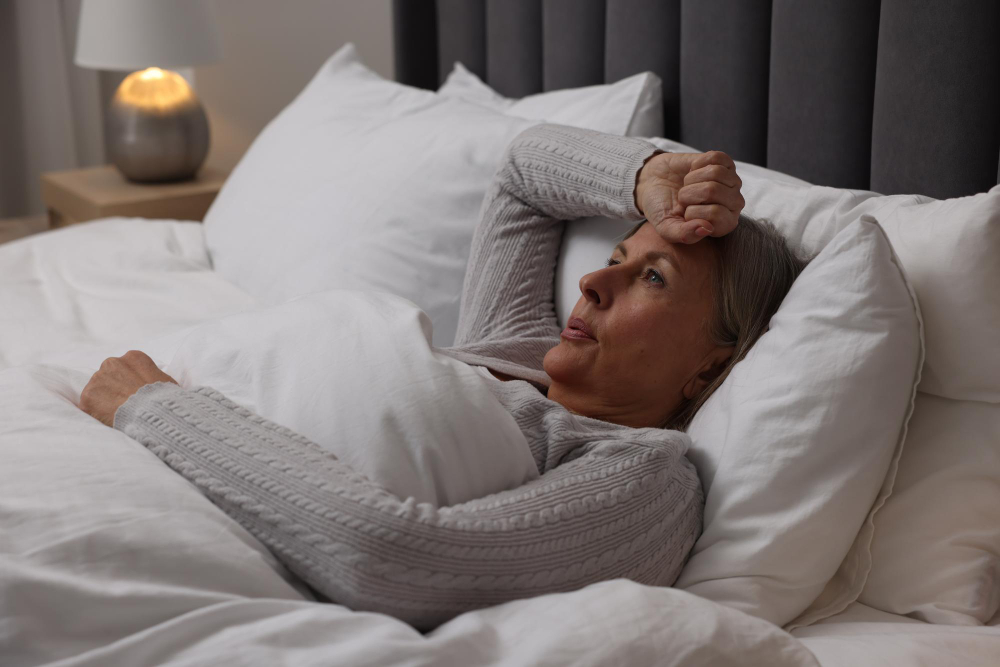
Sleep is not a luxury; it is a critical neurological maintenance period. When anxiety hijacks this process, the brain loses its ability to regulate emotions, making everyday stressors feel insurmountable.
1. The Bidirectional Anxiety-Sleep Loop
The relationship between anxiety and sleep is bidirectional. Anxiety triggers a state of hyper-vigilance that makes falling and staying asleep difficult. Conversely, sleep deprivation impairs the prefrontal cortex’s ability to regulate the amygdala, making you significantly more vulnerable to anxiety the following day.
Over time, this becomes a self-perpetuating cycle. The brain begins to associate the bed with frustration and worry rather than rest, a phenomenon known as conditioned arousal. Breaking this cycle requires a professional psychiatric evaluation to address both the biological and psychological drivers.
2. Cortisol and the “Wired but Tired” State
Anxiety activates the Hypothalamic-Pituitary-Adrenal (HPA) axis, resulting in the release of cortisol—the body’s primary stress hormone. Ideally, cortisol levels should be at their lowest at bedtime. However, in individuals with chronic generalized anxiety disorder, cortisol remains elevated.
This leads to the “wired but tired” sensation: you are physically exhausted, but your nervous system is in a state of high alert, preventing you from entering the deeper, restorative stages of sleep.
3. Common Patterns of Sleep Disruption
Anxiety-related sleep issues typically manifest in three specific patterns:
- Sleep-Onset Insomnia: Difficulty falling asleep due to a “racing mind” and physical tension.
- Sleep-Maintenance Insomnia: Waking up in the middle of the night (often with a racing heart) and being unable to return to sleep.
- Early Morning Awakening: Waking up significantly earlier than intended and immediately feeling a surge of dread or worry.
These patterns are often seen in conditions like panic disorder and require clinical oversight to resolve.
4. Cognitive Overdrive: The Nighttime “Racing Mind”
When the distractions of the day fade, the brain often turns inward. For those with anxiety, this leads to rumination—repeatedly dwelling on past mistakes or future worries. This cognitive overdrive keeps the brain in a high-frequency state (Beta waves), which is incompatible with the Delta waves required for deep sleep.
This mental “gridlock” prevents the natural transition into the sleep cycle and can be exacerbated by secondary depression.
5. Long-term Physiological Consequences
Chronic sleep disruption is not just a mental health issue; it is a systemic health risk. Sleep is when the brain’s glymphatic system flushes out toxins and when the body regulates insulin sensitivity and cardiovascular health.
Long-term sleep deprivation increases the risk of metabolic issues, lowers immune function, and significantly complicates the treatment of bipolar disorder, where sleep is the primary stabilizer of mood.
6. Diagnostic Assessment in Texas
The first step in resolving anxiety-related sleep issues is a comprehensive psychiatric evaluation in Texas. We examine your “sleep architecture,” lifestyle factors, and the specific timing of your anxiety.
It is vital to determine if the sleep issue is a symptom of an anxiety disorder or if a primary sleep disorder (like apnea) is the root cause of the anxiety. This diagnostic clarity ensures that your treatment plan is effective from day one.
7. Clinical Stabilization and Treatment Paths
Recovery focuses on lowering the nervous system’s baseline arousal. This is achieved through a multi-pronged approach:
- Medication Management: Utilizing non-habit-forming medications to lower nighttime cortisol and stabilize neurotransmitters.
- Telehealth Oversight: Frequent check-ins through telehealth psychiatry to monitor progress and adjust care.
- Sleep Hygiene: Implementing biological anchors like consistent wake times and light-exposure regulation.
Our goal is to help you achieve a state where sleep is once again a predictable, restorative part of your life. Consistent medication management ensures long-term success.
8. Frequently Asked Questions (FAQ)
Can I use over-the-counter sleep aids for anxiety-related insomnia?
While OTC aids might provide temporary sedation, they do not address the underlying neurobiology of anxiety. Often, they can leave you feeling groggy the next day without actually restoring your sleep architecture.
Why do I wake up with a racing heart at 3 AM?
This is often due to a “cortisol surge.” If your baseline stress is high, the body’s natural early-morning rise in cortisol can trigger a physical panic response before you are even fully awake.
Will anxiety medication make me feel like a “zombie” during the day?
The goal of modern psychiatric management is the opposite. By stabilizing your sleep at night, you should feel more alert, clear-headed, and energized during the day.
How long does it take to fix my sleep once I start treatment?
Most patients begin to see physical improvements in sleep within 1-2 weeks of starting a tailored clinical plan, though full stabilization of the sleep cycle typically takes 4-6 weeks.
Is telehealth as effective for treating sleep issues?
Yes. Through virtual mental health services, we can effectively evaluate your symptoms and manage your care with the same clinical rigor as an in-person visit.
Reclaim Your Nights, Rebuild Your Days
You don’t have to survive on “tired.” Our Texas-based psychiatric team specializes in breaking the anxiety-sleep loop and helping you find the deep, restorative rest you deserve.